Is Your Staging Supporting Your Asking Price?
Why staging should be a marketing investment, not a box to check.
At the luxury level, the question isn’t whether a property has been staged. It’s whether that staging supports the property’s asking price.
Real estate professionals carefully consider pricing, photography, and marketing strategy. Yet staging, one of the most visible elements of a listing, is sometimes reduced to a question of cost, availability, or an established vendor relationship.
But the least expensive way to furnish a property isn’t necessarily the most effective way to market it.
Staging isn’t simply about filling rooms. It’s about communicating value.
Furnished Doesn’t Mean Strategically Staged
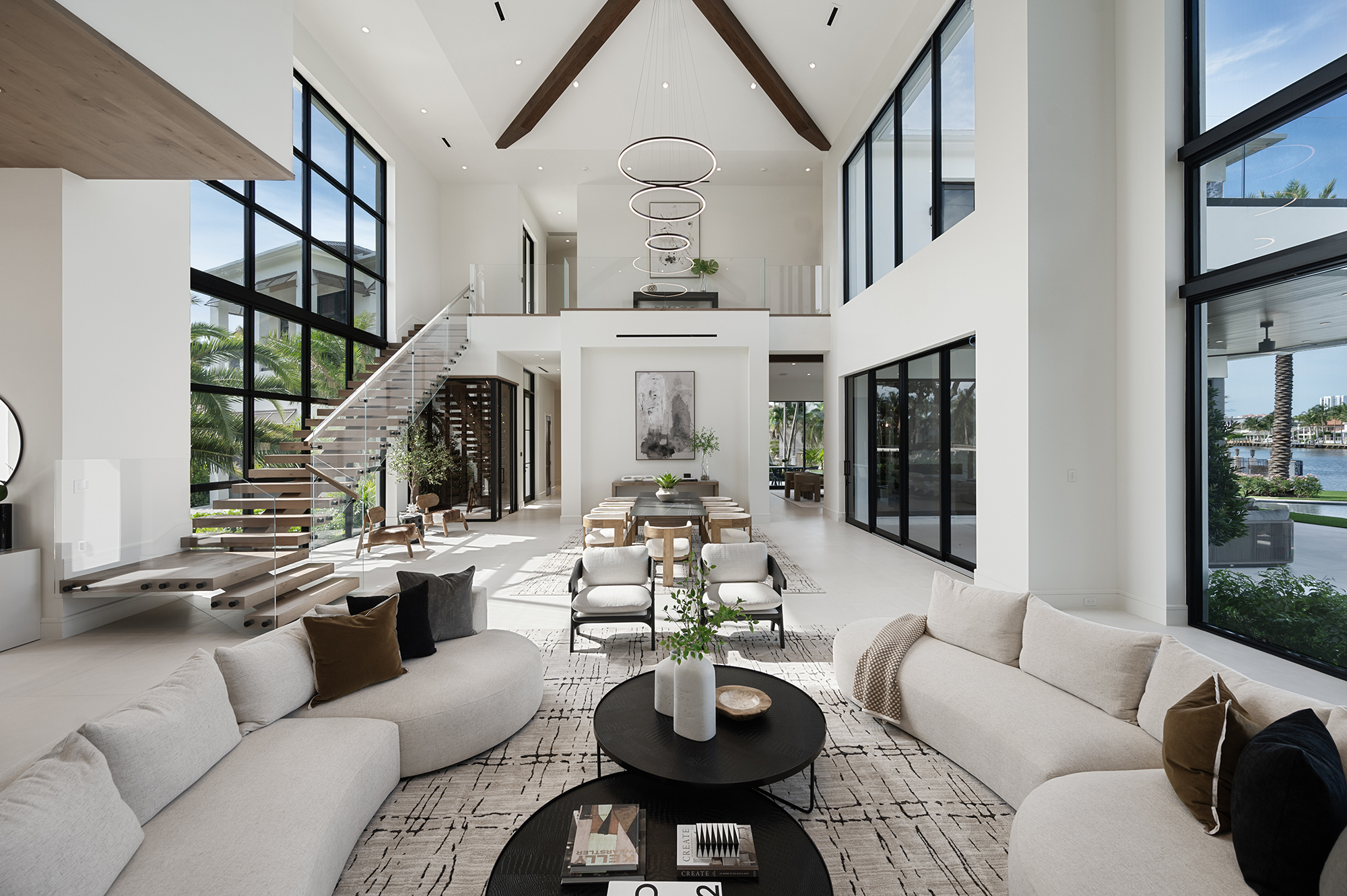
Consider a newly constructed estate approaching $4 million, with expansive entertaining spaces, exceptional finishes, and panoramic views.
Now imagine furnishing it with pieces better suited to a modest townhome.
A small sofa occupies the great room. A dining table seats six in a space designed for substantially more. The executive office remains empty, and the outdoor entertaining areas go largely unused.
The home is technically staged. But what lifestyle is the presentation communicating?
Buyers aren’t simply evaluating square footage. They’re imagining holidays with family, evenings entertaining friends, working from home, and enjoying the amenities that make a property distinctive.
When staging doesn’t demonstrate those possibilities, much of the property’s lifestyle value is left to the buyer’s imagination.
Luxury staging should make a property’s potential visible, not simply make its rooms look occupied.
A Premium Asking Price Creates Premium Expectations
Luxury is relative to the market.
In the Denver metropolitan area, Realtor.com’s October 2026 analysis identified approximately $1.25 million as the entry point to the top 10% of listings, with the top 1% approaching $4.13 million.
A property near the upper end of that spectrum is competing for buyers with substantial choices and expectations.
Architecture, craftsmanship, views, privacy, and amenities may help distinguish the home. Its presentation should reinforce those qualities.
A premium asking price alone doesn’t create a luxury experience.
The staging must complement the architecture, demonstrate the home’s scale, and communicate the lifestyle associated with the property.
Are You Evaluating Staging as an Investment?
Imagine comparing two staging proposals for a $3 million home.
One costs $4,000. The other costs $9,000.
Both include furniture. Both prepare the home for photography. But one may offer appropriately scaled furnishings, architectural cohesion, and an intentional presentation of the home’s entertaining and lifestyle features.
If so, you’re not comparing equivalent services.
The additional $5,000 represents approximately 0.17% of the property’s asking price. That doesn’t automatically justify the investment, but it puts the decision in perspective.
The question isn’t whether spending more guarantees a higher offer. It doesn’t.
The question is whether the additional investment meaningfully strengthens the property’s presentation and communicates what makes it worth its asking price.
Staging cannot independently determine sale price or days on market. But overlooking valuable features or presenting grand spaces with inappropriate furnishings can mean missing opportunities to communicate what makes a property desirable.
The goal isn’t to spend more. It’s to invest intentionally.
Sometimes that means staging fewer rooms with more appropriate furnishings. Sometimes it means prioritizing an outdoor entertaining area over another guest bedroom.
The right strategy begins with the property and its intended buyer, not the furniture available or the lowest quote.
Before You Choose a Staging Provider
Ask what the proposed staging will accomplish.
Does it support the architecture and scale? Does it demonstrate the lifestyle? Does it highlight the property’s most valuable features? Will it translate effectively through photography?
And can the staging provider explain the decisions behind the proposed scope?
These questions deserve as much consideration as the price.
For a practical framework, read our companion article, [How to Evaluate Home Staging Proposals Beyond Price].
The Takeaway
You’ve established the asking price, identified the target buyer, and invested in a marketing strategy.
Does the staging reinforce everything you’re asking buyers to believe about the property?
Staging isn’t a box to check. It’s a marketing strategy to get right.
At Showhomes Elevated, we approach luxury staging through architectural alignment, thoughtful spatial composition, and buyer psychology, developing property-specific presentations designed to communicate the lifestyle each home offers.
Design isn’t decoration. It’s strategy.