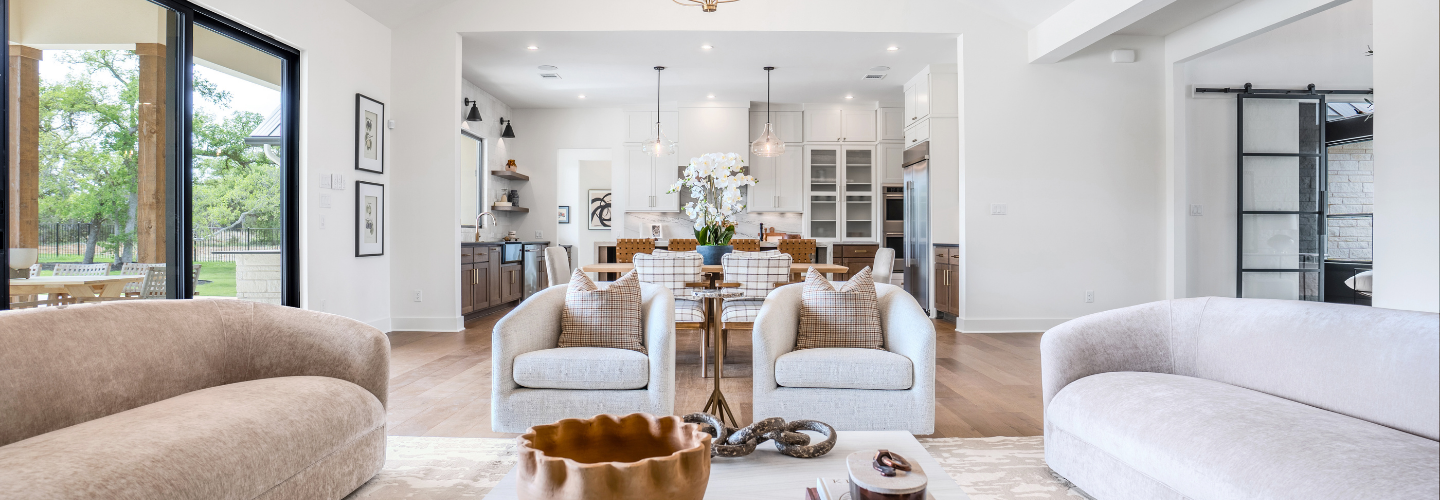
How to Use Staging to Strengthen Buyer Confidence and Drive Better Offers
Here’s the shift most agents feel but don’t always articulate:
Staging isn’t the question anymore. Strategy is.
We already know staging works. It gets attention, improves photos, and helps buyers connect. But in today’s Austin market, where buyers are quick to compare and slower to commit, “better than nothing” isn’t enough.
The way a home is staged shapes how buyers interpret value within seconds online and moments in person.
Done well, staging creates clarity around size, function, and lifestyle so buyers feel confident in what they’re seeing and how it fits their life.
And when buyers feel confident, they write stronger offers.
Here are five ways to use staging more strategically and get more out of the investment.
1. Stage Before You Launch Your Listing
Timing matters more than most people realize.
The first moment your listing hits the market is when it has the most attention. That initial surge of views, showings, and agent interest is where momentum is built. If the home isn’t fully prepared at that point, you don’t just lose time. You lose impact.
Staging after the listing is live often means chasing the market instead of leading it. Price reductions, extended days on market, and inconsistent feedback tend to follow.
When a home is staged before it goes live, everything works together from the start. Photography, marketing, and showings all reflect the same level of preparation. Buyers see a complete, intentional presentation the first time they encounter the property, which shapes how they interpret value from the beginning.
2. Align the Staging Strategy With the List Price
Staging isn’t just about how much you invest. It’s about how well the strategy matches the buyer you’re trying to attract.
List price is one of the clearest indicators of who that buyer is, and different buyers are looking for very different things.
In the mid-market, buyers are often focused on how the home supports their day-to-day life. They’re paying close attention to functionality, layout, and whether the space feels practical and comfortable. Staging at this level should reflect that. It should feel approachable, livable, and easy to step into.
As you move up in price point, the expectations shift. Higher-end buyers are still evaluating function, but they’re also looking for something more. They want to see a lifestyle. They’re drawn to homes that feel elevated, intentional, and complete.
That shows up in the staging strategy.
The number of spaces staged often increases to create a more immersive experience. The aesthetic becomes more refined. The styling is more layered and editorial, with attention to detail that signals quality and care. Every space feels considered, not just the main living areas.
When the staging strategy aligns with the list price, it reinforces the story you’re telling about the home. It meets buyers where they are and reflects what they expect to see at that level.
When it doesn’t, it creates friction.
A higher-priced listing that feels under-staged or overly basic can cause buyers to question the value. A more moderate listing that feels over-designed or disconnected from everyday living can feel inauthentic.
The goal is alignment. When the staging matches both the price point and the buyer’s expectations, the home feels right the moment they walk in, and that’s what moves them closer to making an offer.
3. Stage the Spaces Buyers Actually Care About
You’ve heard that kitchens and bathrooms sell homes. That’s true, but when it comes to staging, there are a few other key opportunities to help buyers connect with your home.
The first big opportunity is the first impression space, the entryway. It sets the tone before buyers have even taken in the full layout. It should feel intentional, welcoming, and aligned with the overall level of the home.
From there, buyers are paying the most attention to the spaces that shape how they live day to day. The living room, dining area, kitchen, and primary suite carry the most weight because they define both the experience and the perceived functionality of the home.
A strong bonus is a workspace. Whether that’s a dedicated office, a secondary bedroom, or a flex space staged as a place to work, it helps buyers immediately understand how the home can support their lifestyle. In today’s market, that clarity goes a long way.
When you prioritize these spaces, you’re not just filling rooms. You’re guiding the buyer through the home in a way that feels clear, cohesive, and easy to say yes to.
4. Use Staging to Address Buyer Questions Before They’re Asked
Most buyer hesitation doesn’t show up as a direct objection. It shows up as uncertainty.
Does my furniture fit here?
How would this room function?
Is this space big enough?
What is this area supposed to be?
When those questions aren’t answered visually, buyers either guess or move on.
Staging is one of the most effective ways to remove that friction. The right furniture scale helps buyers understand the size of a space. Thoughtful layouts show functionality. Styling finishes the space and helps create feeling.
Buyers aren’t walking through homes with a tape measure. They’re using what they see to make quick judgments about size, function, and livability. A competitive staging strategy also includes staging rooms where buyers may question the size, whether too big or too small, or the purpose of the space. Staging gives them those answers without requiring them to work for it.
5. Create a Consistent Online and In-Person Experience
The buyer journey almost always starts online.
Photos create the first impression. They set expectations for what the home will feel like in person. If there’s a disconnect between the online presentation and the in-person experience, it creates hesitation.
This can happen when staging is designed only for photos or when virtual staging is used in place of traditional staging.
A strong staging strategy considers both. It ensures that what buyers see online carries through when they walk the property. The in-person experience should confirm and build on the online experience so buyers gain a sense of trust and connection to the home. The same sense of scale, flow, and lifestyle should be present in both experiences.
Consistency builds trust. And trust is what allows buyers to move forward with confidence.
Final Thought
Staging works. That part is settled.
What separates listings that sit from those that sell with momentum is how intentionally staging is used.
When it’s done early, aligned with the price point, focused on the right spaces, designed to answer buyer questions, and carried consistently from online to in-person, it becomes more than a visual upgrade.
It becomes a strategic tool that shapes perception, strengthens buyer confidence, and ultimately protects the price of the home.
If you’re preparing a listing this spring and want a second set of eyes on how to position it, I’m always open to walking through the strategy with you.