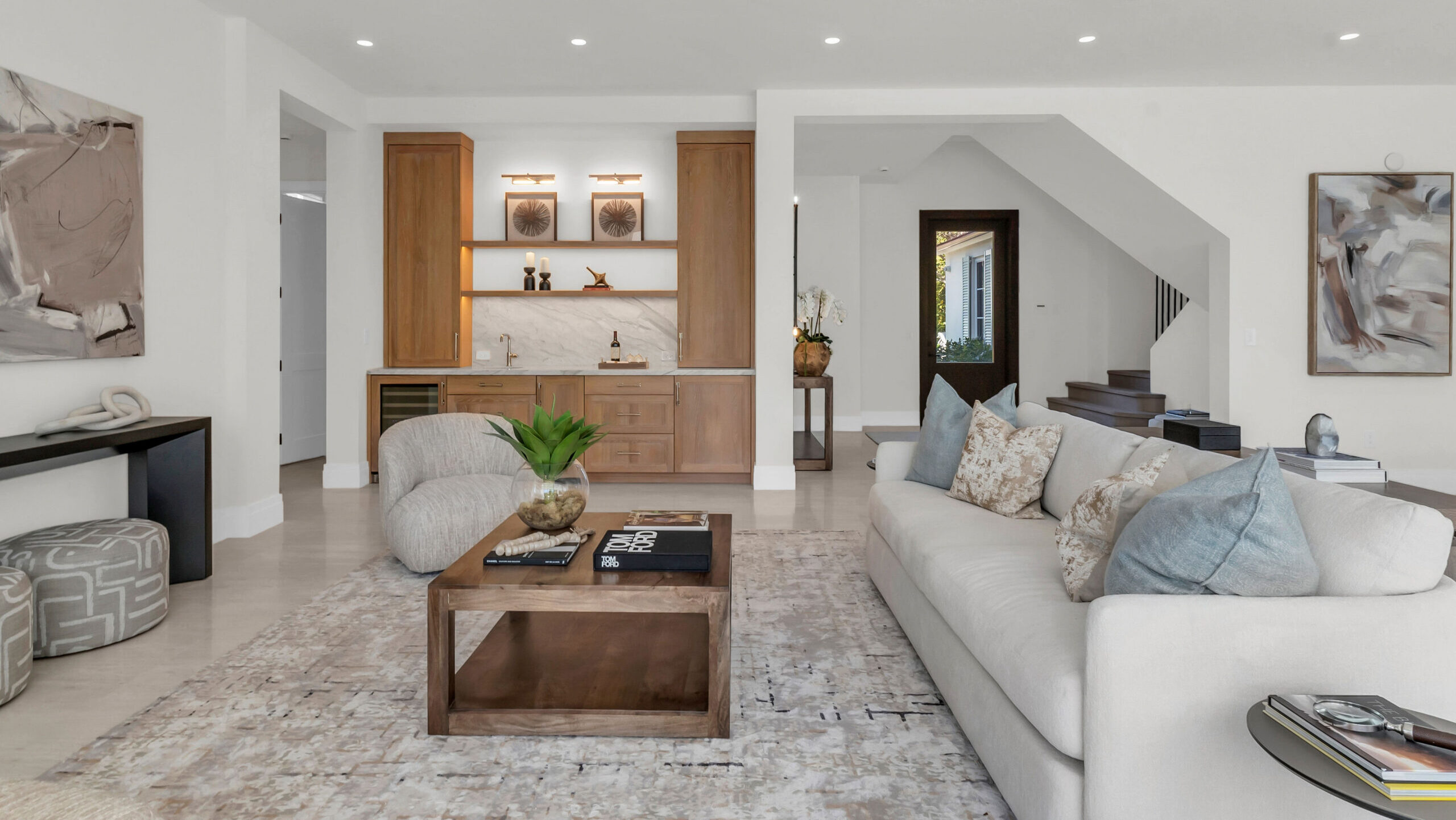
5 Things Luxury Staging Should Do Beyond Making a Home Look Beautiful
The design decisions that shape how buyers experience a property
A beautifully staged home can stop you mid-scroll. But beauty alone isn’t the strategy.
The most effective staging is doing something quieter and far more important. It is shaping how a buyer experiences the property.
Before buyers begin measuring walls or calculating renovation costs, they are already forming impressions. A room feels generous or constrained. The architecture feels important or gets lost. The floor plan makes immediate sense or requires explanation. The home feels elevated, inviting and worth exploring, or it becomes one more listing in a long afternoon of showings.
These reactions often happen before a buyer can articulate why.
Thoughtful staging anticipates them.
At its best, staging is less about decorating a home and more about editing it. Through scale, proportion, composition, materiality and restraint, design can clarify the architecture and help buyers see what is already there.
For luxury properties in particular, that distinction matters. The presentation should support the caliber of the home without overwhelming it. The buyer should remember the property, not the staging.
Here are five things sophisticated staging should accomplish beyond simply making a home look beautiful.
1. Define the Way a Room Lives
Putting furniture in a room is easy. Defining the room is something else entirely.
Every space offers clues about how it wants to be experienced: its architecture, circulation paths, natural focal points, relationship to adjoining rooms, windows, views and light.
Good staging interprets those clues.
A large living room, for example, doesn’t necessarily benefit from being filled simply because it can accommodate more furniture. A carefully positioned conversation area may do far more to emphasize a fireplace, frame a view and preserve the sense of openness that made the room special in the first place.
An unusually shaped room may need even greater restraint. The right arrangement can turn an awkward space into an intentional one simply by showing buyers how naturally it can function.
The goal is clarity.
A buyer shouldn’t walk into a room and wonder, What would we do with this space?
They should understand it almost instinctively.
2. Use Scale to Shape Perception
Scale is one of the most powerful and frequently underestimated tools in staging.
Furniture that is too large can interrupt circulation, conceal architectural details and make a room feel smaller than it is. But furniture that is too small can be equally problematic, particularly in luxury homes with generous proportions.
A few underscaled rugs or pieces floating within a large room don’t necessarily make the room appear larger. They can make it feel empty, disconnected or less substantial.
The goal isn’t to make every room look as large as possible.
It is to make the proportions feel right.
A great room with high ceilings may call for a substantial sectional, larger artwork and pieces with enough visual weight to relate to the architecture. An expansive dining area needs a table capable of anchoring the space. A generous primary bedroom should feel intentionally spacious rather than simply underfurnished.
When scale is right, most buyers won’t consciously notice it.
They simply experience the room differently.
It feels balanced. Comfortable. Considered.
3. Let the Architecture Lead
The best staging doesn’t compete with a home.
It directs attention toward what makes the home worth noticing.
A beautiful window should remain a beautiful window. A long sightline should be allowed to breathe. A fireplace, staircase, ceiling detail or exceptional view shouldn’t have to compete with furniture and accessories for visual importance.
This is where restraint becomes just as important as decoration.
Every object introduced into a room affects where the eye travels. A sofa can frame a view or obstruct it. Artwork can reinforce a focal point or create an entirely new one. A rug can establish the boundaries of a space or visually cut it short.
Instead of asking only, What would look beautiful here? we ask another question: What should the buyer notice here?
Sometimes that means adding something.
Just as often, it means knowing what to leave out.
When the architecture leads, the furnishings become supporting characters rather than the story itself.
4. Design for the Buyer Without Designing a Buyer
Understanding the likely buyer matters.
Inventing an imaginary person and decorating an entire house for them is something different.
A home can communicate sophistication, warmth and lifestyle without becoming so specific that prospective buyers feel as though they are walking through someone else’s life.
That distinction is particularly important in staging.
Interior design for a homeowner can be deeply personal. It should reflect their tastes, routines, collections and preferences. Staging has a different responsibility. It needs to create emotional connection while leaving room for interpretation.
The result should feel aspirational, but not theatrical. Current, but not trend driven. Memorable, but not overly personal.
And that expression should change from property to property.
A contemporary Boulder residence may call for a completely different design language than a historic Denver home, a mountain retreat or a newly constructed property along the Front Range. Architecture, neighborhood, price point, natural surroundings and likely buyer expectations all inform the direction.
There isn’t one formula for a beautifully staged home.
The question is what allows this home to tell its strongest story while giving buyers enough space to imagine their own.
5. Consider the First Showing, Which Happens Online
For most buyers, the first showing doesn’t begin at the front door.
It begins on a screen.
A buyer scrolling through listings may encounter dozens of properties before deciding which ones deserve a closer look. Unlike standing inside a room, a photograph offers only one perspective.
The eye can’t wander around the corner. It can’t move closer to the window or experience the volume of a ceiling. The photograph has a single frame in which to communicate the space.
That makes composition an important part of staging.
Furniture placement, negative space, contrast, sightlines and visual balance can all determine whether a room reads clearly in a photograph. A space that works perfectly well in person can photograph poorly if these relationships haven’t been considered.
It also means understanding that not every view carries equal weight.
The exterior, main living space, kitchen, primary suite and significant architectural or landscape features often become the images that define a listing. Those moments deserve particular attention because they are frequently responsible for a buyer’s first impression of the property.
Staging should therefore work in two dimensions as well as three.
The first showing doesn’t begin when someone schedules a tour.
It begins when they stop scrolling.
Beautiful Isn’t Enough. The Presentation Should Belong to the Property.
There is one idea connecting all five of these decisions: alignment.
A well designed home should not feel as though a collection of attractive furniture was simply placed inside it.
The architecture, furnishings, artwork, textiles and accessories should feel as though they belong in conversation with one another.
This becomes especially important as the caliber of the property rises.
An architecturally significant or beautifully finished home presented with furnishings that feel noticeably disconnected from it can create subtle visual friction. Buyers may never consciously identify the disconnect, but the property can feel less resolved as a result.
Luxury doesn’t require excess.
Often, it is communicated through the opposite: proportion, texture, materiality, craftsmanship, negative space and attention to detail.
It isn’t about adding more.
It’s about selecting better.
And it is why staging shouldn’t be approached as a standardized furniture package applied from one property to the next. The home itself should inform the design.
The Best Staging Almost Disappears.
There is a paradox to successful staging.
When it is done particularly well, buyers may barely notice it.
They don’t leave talking about the sofa.
They remember the incredible light in the living room. The scale of the primary suite. The fireplace. The view. The way the kitchen connected to the rest of the home. The corner where they could imagine drinking coffee in the morning.
They remember how naturally they could picture themselves there.
That is the work staging is meant to do.
The goal isn’t to make a home look decorated. It’s to make the value of the home easier to see.
At Showhomes Elevated, we approach staging through an interior design lens, considering architecture, space planning, scale, sightlines, buyer perception and photography to create a presentation specific to each property.
Because a home doesn’t need more things to make an impression.
It needs the right things, in the right places, for the right reasons.
Showhomes Elevated is a Colorado luxury home staging and interior design studio providing design-led staging, listing preparation, property transformation, and interior design throughout Denver, Boulder, the Colorado Front Range, and Colorado mountain communities including Summit County. Furnishings featured in our staged properties are available for purchase.